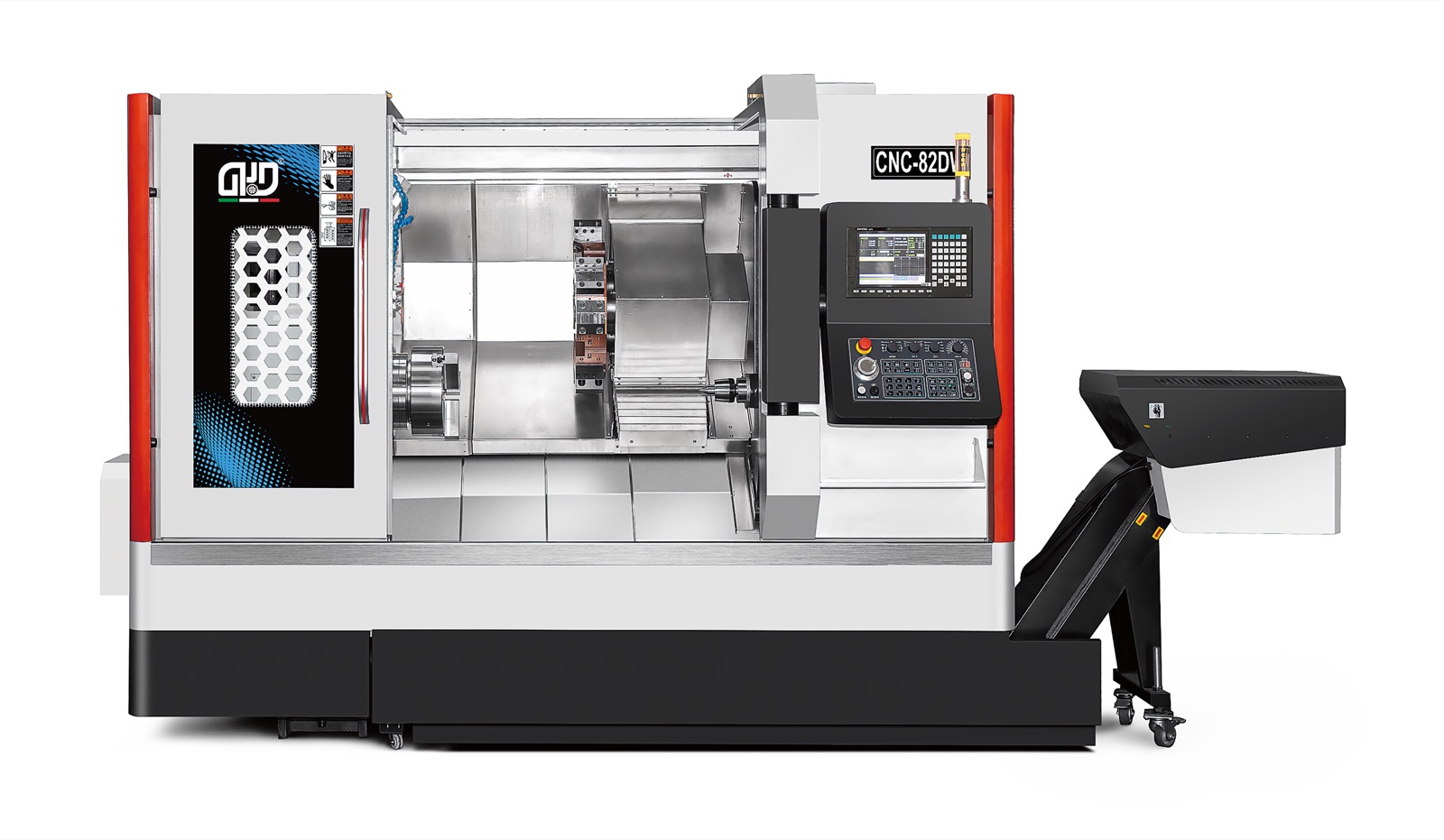
A useful dual-spindle CNC lathe quotation starts with the part and process, not a machine model name. Two parts with similar diameters may require very different spindle arrangements, tooling, automation and inspection plans. A clear request for quotation (RFQ) helps the machine supplier identify risks early and avoids comparing proposals that solve different problems.
This checklist is designed for production engineers, plant managers, distributors and purchasing teams preparing a twin-spindle or twin-turret CNC lathe project. It does not replace a technical review, but it gives both sides a better starting point.
1. Define the part family
Provide a controlled drawing for every representative part, including revision level, material, heat treatment, coating and critical characteristics. If several components will share the machine, identify the smallest, largest and most demanding parts. A 3D model is helpful, but the drawing should remain the authority for tolerances, finishes and inspection requirements.
2. Describe the incoming blank
State whether production starts from bar, tube, forging, casting or a pre-machined blank. Include maximum stock diameter, realistic straightness, cut-length variation and surface condition. For bar-fed work, also identify expected bar length and the preferred bar-feeder interface. These details affect workholding, spindle bore selection and material-handling design.
3. Separate demand from cycle-time targets
Give annual volume, lot size, shifts per day, planned utilization and changeover frequency. Then state the required output or target cycle time separately. A target is not a guaranteed result: it must be checked against cutting data, tool life, part transfer, inspection and operator tasks. Supplying both demand and target output allows the application team to test whether the automation concept is reasonable.
4. Map the complete operation sequence
List turning, drilling, boring, threading, milling, cross-drilling and deburring operations in their intended order. Mark any operation that is already completed upstream or must remain for a later process. If the goal is complete machining in one setup, identify the surfaces that establish datum relationships. This is especially important when a second spindle receives the part for back-working.
5. Explain spindle handoff requirements
For twin-spindle machining, describe how the part may be transferred, which features can be gripped, whether orientation must be maintained and which finished surfaces cannot be marked. Include any allowable remnant or cutoff condition. The supplier can then review workholding, synchronization and collision-clearance requirements instead of assuming a generic handoff.
6. Provide tooling and live-tool expectations
List preferred toolholders, special tools, driven-tool operations and coolant requirements. Identify restricted-access features and the longest expected boring or drilling tools. If tool-life monitoring, broken-tool detection or sister tooling is required, include it in the RFQ rather than adding it after the control and turret configuration have been selected.
7. Define quality and inspection
Separate normal production dimensions from safety, fit or regulatory characteristics. State the measurement method, sampling plan, process-capability requirement and any traceability or data-export requirement. If probing or in-process gauging is expected, explain what must be measured and how the result should influence the process.
8. Describe automation boundaries
Clarify what the machine supplier should include: bar feeder, gantry loader, robot, parts conveyor, catcher, washer, marking, gauge or connection to a factory system. Provide container sizes, floor-space limits and the expected operator interaction. Also identify who supplies guards, end-of-arm tooling and communication interfaces.
9. Document utilities and site constraints
Provide available electrical supply, compressed-air quality, extraction needs, coolant policy, ambient conditions, access-door dimensions, lifting restrictions and foundation constraints. For an international installation, confirm the destination country and required documentation language. These items affect installation readiness but are often missing from early quotations.
10. State controller, training and service needs
List approved or preferred CNC controls, programming workflow, network requirements and operator language. Define training audiences and expected service coverage. A distributor or end user should also identify who will own application prove-out, preventive maintenance and spare-parts planning after acceptance.
11. Make acceptance measurable
Describe factory and site acceptance tests before ordering. Name the representative part, material source, quantity, inspection method, run duration and documentation required. If cycle time, capability or unattended running is part of acceptance, specify the conditions and exclusions. Measurable criteria protect both buyer and supplier.
12. Compare architectures using verified project requirements
Do not treat every machine with two spindles as interchangeable. A gang-tool turn-mill layout, a dual-spindle dual-turret platform and a Y-axis turret machine address different process balances. Review GKD examples such as the dual-spindle gang-tool turn-mill center, the dual-spindle dual-turret turning and milling center, the LM-8SY Y-axis dual-spindle turret lathe and the CNC-46DW. Each product page contains only its retained, verified information; final configuration must be confirmed for the application.
A practical RFQ package
A strong package normally contains controlled drawings, 3D files, a part-family matrix, annual volume, process assumptions, quality requirements, automation scope, plant utilities and acceptance criteria. Add photos or video of the current process when they clarify handling or chip-control problems, but do not use them as substitutes for controlled dimensions.
For related engineering context, see Advantages of Dual Spindle Swiss Type CNC Lathe and Precision and Efficiency Redefined: Dual-Spindle, Dual-Turret CNC Lathe. When the package is ready, contact GKD CNC for an application review. The review should confirm the exact machine, options and performance assumptions before any order.